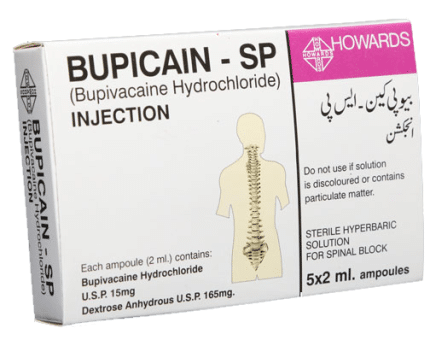

BUPIVACAINE HCL
Bupivacaine is a long acting local anaesthetic. It blocks nerve signals in the area where it is injected, so the region goes numb while the patient stays awake. It lasts several hours, which makes it useful for surgery and for pain relief afterwards.
What Bupivacaine Is Used For
- Spinal and epidural anaesthesia, including for caesarean section
- Epidural pain relief in labour
- Nerve blocks for surgery and post operative pain
- Local infiltration during procedures
Common Side Effects
- Drop in blood pressure with spinal or epidural use
- Numbness and heaviness in the legs until it wears off
- Nausea
- Headache after a spinal, in some patients
Precautions
Bupivacaine is given only by anaesthetists and trained doctors, with monitoring and resuscitation equipment at hand, because accidental injection into a blood vessel can affect the heart. Tell the team about any previous reaction to local anaesthetic, heart rhythm problems, or blood thinning medicines before a spinal or epidural.
This page is general information only. It is not a substitute for advice from your doctor or pharmacist, and it does not include dosage. Always follow the directions given to you and read the leaflet inside the pack.