
Health Guides & Medicine Information
Fever in Children: When to Worry and When to Wait

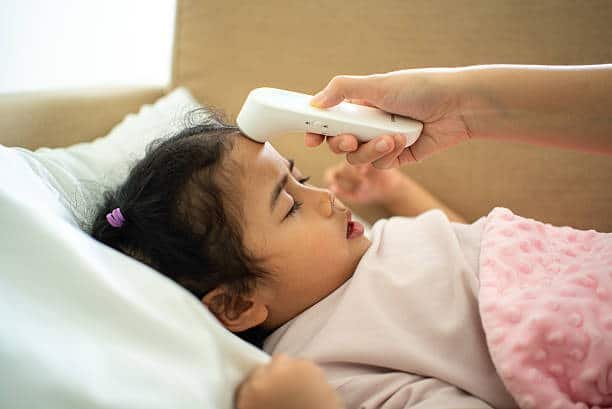
It is two in the morning, your child is hot to the touch, and the thermometer reads 103°F. Every instinct says panic about that number.
Here is what paediatricians repeat constantly and what almost no parent believes the first time: the number matters far less than how the child is behaving. A child at 103°F who is drinking, alert and still arguing about bedtime is usually in less trouble than a child at 100°F who is limp, refusing fluids and difficult to wake.
Fever itself is not the illness. It is the body turning up the heat to fight one. What matters is finding out what that illness is, and recognising the small number of situations where waiting is genuinely dangerous.
This article is for general awareness only. It is not a substitute for examining a child. If you are worried, see a doctor — parental instinct is a better guide than any article.
What actually counts as a fever
A temperature above 100.4°F (38°C) is a fever. Below that is not, no matter how warm the forehead feels — a child who has been running around or sleeping under a heavy quilt will feel hot without being ill.
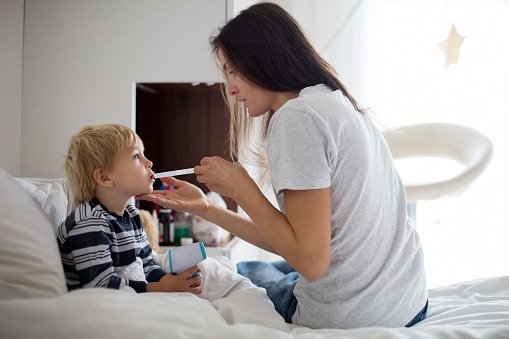
Use a digital thermometer, not the glass mercury ones still sitting in many homes. Mercury thermometers are slow, hard to read, and a genuine hazard if a child bites one. Armpit readings are fine for home use as long as you are consistent; note that they read slightly lower than oral.
The most useful habit is simple: write the reading and the time down. When you tell a doctor “101 in the morning, 103 by evening, three days running,” you have given them something to work with. “He has had fever” tells them almost nothing.
When to see a doctor immediately
Some situations do not allow a wait-and-watch approach:
- Any fever in a baby under three months. This is an emergency, full stop, even if the baby looks well. Small infants cannot localise infection and can deteriorate within hours.
- Fever with a stiff neck, or a headache with vomiting
- A rash that does not fade when you press a glass against it
- Difficulty breathing, fast breathing, or the skin pulling in between the ribs
- A fit or seizure
- Unusual drowsiness, or a child who is hard to rouse
- Refusing all fluids, or no urine for eight hours or more
- Fever lasting more than three days without an obvious cause
- Continuous crying that nothing settles, or a weak, high-pitched cry in an infant
The single most reliable warning sign is not on any thermometer: a child who does not respond like themselves. No interest in toys, no interest in food, no interest in you. Trust that observation over the reading.
What to do at home
For a child who is otherwise alert and drinking:
- Fluids, constantly. Small sips, frequently. Water, milk, soup, fresh juice, ORS if there is any vomiting or loose motion. Fever burns through fluid faster than parents expect.
- Paracetamol for discomfort — not to chase the number down. Paracetamol syrup is dosed by the child’s weight, not age, and getting that dose from your doctor once is worth more than guessing every time.
- Light clothing and a normally ventilated room. Not a quilt, not a heater.
- Rest, and no school — both for recovery and to stop it spreading through a classroom.
What to stop doing
These are the habits that cause the most avoidable harm:
- Cold water or ice sponging. It causes shivering, and shivering raises the core temperature. Lukewarm water only, if you sponge at all.
- Antibiotics for every fever. Most childhood fevers are viral, and antibiotics do nothing against a virus. Every unnecessary course pushes resistance further — the same process that gave Pakistan drug-resistant typhoid.
- Aspirin. Never give aspirin to a child with fever. It is linked to a rare but serious condition affecting the brain and liver.
- Doubling up on fever medicines because one “is not working.” Many combination products already contain paracetamol, and overdose is easier than it sounds.
- Wrapping a shivering child in a heavy quilt. It traps heat in exactly the wrong direction.
When fever lasts more than three days
Most viral fevers settle in two to three days. A fever running past that deserves a proper look, particularly in Pakistan between August and October, when several serious illnesses circulate at once.
A fever that climbs a little higher each evening and never fully breaks may be typhoid. A fever that spikes hard from day one, with severe body pain, may be dengue. Fever arriving in cycles with shaking chills points towards malaria. Only a blood test separates them — but knowing the patterns helps you push for the right test instead of accepting a third round of antibiotics.
Worth keeping at home
Nothing here replaces a doctor. It simply means you are measuring from day one instead of guessing until day three:
- A digital thermometer, and a notebook or phone note for the readings
- Paracetamol syrup, within expiry, with the dose your doctor gave you written on the box
- ORS sachets — the single most underused item in Pakistani homes
- A working first aid box that someone checks twice a year
If a doctor has prescribed something, you can upload the prescription and have it delivered instead of leaving a sick child to go to the chemist.
Common questions
Does a high fever cause brain damage?
Fever from ordinary infection does not. The temperatures that damage the brain come from heatstroke, not from a child’s body fighting a virus. This fear drives a great deal of unnecessary medicine.
My child had a fit during fever. What now?
Febrile seizures are frightening to watch and are usually harmless in children between six months and five years. Lay the child on their side, remove anything nearby, do not put anything in the mouth, and time it. Any first seizure needs a doctor the same day.
Should I wake a sleeping child to give medicine?
Generally no. Sleep is doing more good than the syrup. Wake them only if a doctor has specifically instructed it.
How long should a child stay home?
Until they have been fever-free for a full twenty-four hours without medicine, and are eating and playing normally again.
The short version
Watch the child, not the thermometer. Keep fluids going. Any fever under three months of age is an emergency. Any fever past three days needs a diagnosis, not another antibiotic. And if something feels wrong even though the numbers look fine — go anyway. Parents are usually right about that.
Related Reading
Frequent infections and low energy in children can sometimes be linked to low vitamin D. Read our guide on vitamin D deficiency in Pakistan to learn the signs and safe treatment.